
Finance Minister Nirmala Sitharaman on Tuesday met top officials of the finance and corporate affairs ministries to review the implementation of various announcements of the Union Budget FY24. "The finance minister underlined the importance of continuous assessment of progress to ensure that various announcements are implemented in a time-bound manner," the finance ministry said in a tweet. Sitharaman also discussed in detail various issues on the digital competition laws with Rajeev Chandrashekhar, the minister of state for entrepreneurship, skill development, electronics and technology.

The income-tax (I-T) authorities have tightened disclosure norms for charitable trusts. They now have to declare the nature of their activities from October 1 for tax purposes. The Central Board of Direct Taxes (CBDT) has notified changes in reporting rules where the charitable institutions have to mention whether the activities undertaken are charitable, religious, or both to claim tax benefits.

'Global coordination, convergence, market complexities and dynamics and cross-border enforcement compound the existing challenges we face.'

Insurance companies may soon face goods and services tax (GST) audits as tax authorities plan a "deep dive" into their business practices to check for the possibility of a raft of tax-linked irregularities. Several insurance companies are being probed for wrongly availing of the input tax credit without the underlying supply of goods and services based on fake invoices generated by their channel partners and intermediaries. "We want to deep dive into the overall business and see if there are further taxation issues besides commissions, which are already being investigated," a senior official of the Central Board of Indirect Taxes and Customs said.

Larger firms feel that the smaller players have muddied the waters for the IBC process, leading to excessive regulation of resolution Professionals.
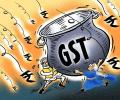
The Goods and Services Tax (GST) Council, which is likely to meet in the third or fourth week of June, is set to clear the operational framework of the much-awaited GST appellate tribunal, which will deal with tax disputes and streamline resolution. "The final blueprint, mainly the operational part, is expected to be presented in the GST Council meeting for approval. "This will pave the way for the tribunal to be functional, both at the central and state levels," said a senior government official, who expects the tribunal to be up and running by November.

The investor education and protection fund authority (IEPFA) has reached out to top hundred companies to reduce the documentation required for individuals trying to claim their shares, according to a senior government official. Recently, the Supreme Court-appointed expert panel on the Adani-Hindenburg case had raised issues such as capacity constraints faced by IEPFA in clearing these claims which are over Rs 5,000 crore. "Our immediate priority is to ensure that claims of those investors whose application was approved a year ago but the transfer has not gone through yet are settled first.

The Central Board of Direct Taxes (CBDT) on Monday clarified that any deposit in the form of bonus or incentives credited in a user account will be considered net winnings, and subject to tax deduction, in case of withdrawal. If these are used only for playing, then it's not liable for tax deducted at source (TDS). Further, in case net winnings do not exceed Rs 100 a month, the applicable tax need not be deducted.

Both Jet Airways and Go First have met with a similar fate of landing up in insolvency, albeit for different reasons. Whether Go First will be able to avoid the sharp erosion in value like in the case of Jet, experts say, will depend on how quickly it is able to restart operations and retain its slots at airports. Go First, owned by the Wadia group, filed for voluntary corporate insolvency resolution on May 2 due to inadequate capacity utilisation that led to a cash crunch.

'In real estate project insolvency, no one size can fit all.'

The Appointments Committee of Cabinet has named Ravneet Kaur, a Punjab cadre IAS officer of 1988 batch, as chairperson of the Competition Commission of India (CCI). Kaur will hold the post for five years or until attaining the age of 65. She is the second woman to serve in an 'economic regulator' role after Madhabi Puri Buch, who was appointed chairperson of the Securities and Exchange Board of India last year and the first woman to head the country's chief national competition regulator.
In what could result in a complete overhaul of the Insolvency and Bankruptcy Code (IBC), the insolvency regulator has sought public comments on the regulations it notified under the code to date. The Insolvency and Bankruptcy Board of India (IBBI) has given a window of eight months ending December 31 to all stakeholders to share their views on its regulations. IBBI has called the exercise "crowdsourcing of ideas".

Sebi is learnt to have written to several regulators including those in Bermuda, Luxembourg, and Switzerland, seeking detailed information on some FPIs.

The government is planning to draft rules for the National Company Law Tribunal (NCLT) to deal with Insolvency and Bankruptcy (IBC) cases, according to official sources. The Ministry of Corporate Affairs (MCA) is also looking to fill all vacant posts at various NCLT Benches by August and put in place an IT-enabled system that would use artificial intelligence (AI) for case management. The NCLT, adjudicating authority for matters related to company affairs, was constituted before the IBC came into effect.

To further tighten its control of practising accountants, the Centre has brought within the ambit of the Prevention of Money Laundering Act (PMLA) their "financial transactions" such as operating and managing their client firms and trusts, and buying and selling business entities. The Union finance ministry issued a gazette notification on this on Wednesday. Under the new rule, chartered accountants, company secretaries, and cost and works accountants carrying out such transactions (on behalf of their clients) will now be required to go through the Know Your Company (KYC) process before commencing work.

Expanding investigation into allegedly wrongful claims of input tax credit by insurance companies, the tax authorities are probing a section of automobile dealers who have supposedly generated fake invoices without providing any service, which is a punishable offence under goods and services tax (GST) law. The authorities are learnt to have questioned the car dealers to explain the services they provided general insurance companies. The investigators suspect car dealers pitched for insurance schemes that give them commissions in excess of those insurance regulations permit.

A key feature of the new version is to identify the people transacting on its portal by linking each user ID with the person's permanent account number (PAN), followed by a two-factor authentication through mobiles and email IDs. Those who cannot complete the KYC requirements cannot use the portal.

'Who are the people who are dying?' 'What is their profile?' 'We need to know these things.' 'We do not take health issues seriously.'
The government and Life Insurance Corporation's (LIC's) strategic stake sale in IDBI Bank is expected to move to the second stage by the first quarter of FY24, said two people in the know. They added that considering the progress of the ongoing deal, financial bids are expected to come in by June this year. The proposed IDBI Bank stake sale is divided into two sequential stages.
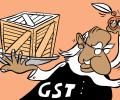
Overhaul of the goods and services tax (GST) structure, including possible changes in the tax slabs, may now be taken up only after the 2024 Lok Sabha elections, given the number of states that are going to the polls in its run-up. "No major overhaul of tax rates is expected in GST until the end of next fiscal year. One major reason for this is that some members of the group of ministers (GoM) - mandated to look at rate rationalisation by the GST Council - are from poll-bound states. Later, this may lead to reconstitution of the panel," a senior government official told Business Standard. Besides, both the Centre and states are not in favour of frequent changes in the tax rates amid inflationary uncertainties; they believe any major change should be brought in after extensive deliberations, according to the official.
 © 2026 Rediff.com - Advertise with us - Disclaimer - Privacy Policy - Sitemap - Feedback - About us - Terms of use - Grievances